Declassified Cold War Surveillance Satellite Unexpectedly Fragments in Low Earth Orbit
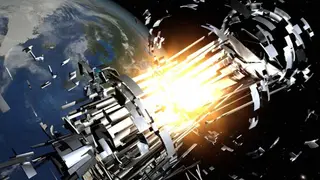
The USA-32 satellite, a Cold War-era intelligence spacecraft launched in 1988 to intercept Soviet radio signals, unexpectedly fragmented into debris on September 13, 2026. The satellite was part of the classified FARRAH program operated by the National Reconnaissance Office and was designed as a large cylindrical craft capable of collecting radio-frequency emissions in the 2 to 18 GHz range. The U.S. Space Force is monitoring the resulting orbital debris and has reported no immediate threats to other spacecraft, though the cause of the fragmentation remains undetermined.
The USA-32 satellite represented a significant shift in Cold War surveillance technology. Earlier FARRAH program spacecraft were compact, box-shaped vehicles, but FARRAH III adopted a distinctive cylindrical design optimized for its mission of detecting Soviet radar transmissions across a broad frequency spectrum. Though the NRO has recently made aspects of the program public, many operational details remain classified, leaving substantial gaps in understanding the satellite's full capabilities and service history.
The debris event itself occurred at a relatively accessible orbital altitude where numerous active satellites operate. While space debris fragmentation events have multiple potential causes—including pressurized propellant tank ruptures, battery failures, or collisions with existing orbital debris—investigators have found no indicators of hostile action or deliberate destruction. The exact trigger for USA-32's breakup may prove difficult to determine given the satellite's age and the challenging nature of forensic analysis in space.
This fragmentation could complicate already challenging space traffic management, as hundreds of new debris pieces now occupy orbits shared by commercial and government spacecraft. Insurance costs for satellite operations may reflect increased collision risk, potentially affecting telecommunications and Earth observation services. The incident underscores how aging Cold War-era systems, despite their strategic historical importance, pose tangible hazards to modern space infrastructure and highlights ongoing international concerns about orbital debris accumulation.