Ancient Trogon Fossil Reveals Evolution of Bird's Distinctive Reversed Toe
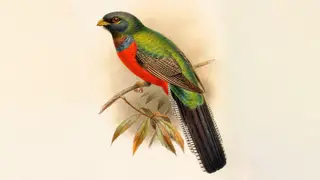
A 55-million-year-old trogon fossil discovered in Denmark provides evidence that modern trogons' characteristic reversed second toe evolved over time. The newly identified species, Daniatrogon kochi, possessed a second toe that pointed forward like other birds, unlike modern trogons where this toe is permanently reversed. This early fossil offers scientists a rare window into the evolutionary stages before the distinctive heterodactyl foot arrangement became established in the trogon lineage.
Trogons are tropical and subtropical birds distinguished by their unusual foot structure, where the second toe permanently points backward to work alongside the big toe against the other forward-facing digits. This arrangement, called heterodactyl, was thought to strengthen a weak big toe for perching. The Daniatrogon kochi discovery challenges this assumption, as the early species possessed a notably long big toe similar to another ancient trogon, Masillatrogon, suggesting the toe only diminished after the reversed toe evolved.
The fossil record reveals that modern trogons likely adopted a more sedentary hunting style over evolutionary time. Early trogons apparently foraged more actively while moving through vegetation, requiring enhanced foot grasping capability. As trogon behavior shifted toward hunting by launching from stationary perches, the reversed second toe alone became sufficient for stability, and the big toe gradually reduced in size—a significant lifestyle transformation reflected in skeletal anatomy.
This discovery may refine scientific understanding of how anatomical features correlate with behavioral adaptation in birds, potentially influencing how paleontologists interpret fossil morphology across species. For the broader public, the research demonstrates how examining evolutionary intermediates reveals that animal traits we perceive as fixed characteristics actually represent endpoints of gradual change. Museums and educational institutions could use this finding to better communicate how modern animals reflect millions of years of accumulated evolutionary adjustments to shifting ecological roles.