Innodata's Motion-Capture Facility Generates Training Data for Next-Generation Humanoid Robots
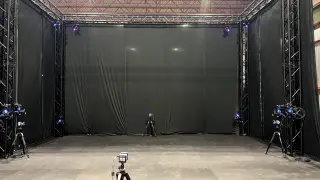
Innodata has established a new laboratory equipped with Vicon cameras to capture precise movement data for training humanoid and industrial robots. The facility addresses a critical shortage of real-world interaction data needed to develop physical AI systems, using direct 3D motion capture rather than inferring movement from 2D video. The company aims to accelerate robot development cycles and improve safety by providing comprehensive data collection and model evaluation services.
Innodata's new facility uses Vicon motion-capture technology to record movement in three dimensions directly, rather than reconstructing it from video footage. This distinction matters significantly for training purposes, as inferring 3D positions from 2D images introduces errors that compound during robot learning. The company positions itself as offering robotics teams a comprehensive pipeline, handling everything from initial data collection through subsequent performance validation.
The data scarcity problem reflects a fundamental asymmetry in AI development: while language models trained on internet-scale text corpora, physical systems must acquire understanding through painstaking, real-world interaction. Each movement a robot learns requires deliberate capture and labeling, making the acquisition process time-consuming and resource-intensive for development teams.
This infrastructure could accelerate robotics commercialization by reducing one of development's costliest bottlenecks. Faster, more capable humanoid deployment may transform manufacturing and service sectors, potentially displacing certain job categories while creating demand for specialized roles. The emphasis on safety-relevant training data—such as understanding task context—suggests awareness of risks, though broader questions about robot deployment's societal impacts extend beyond technical training considerations.