October's Twin Celestial Events: Jupiter Lunar Eclipse and Saturn's Best Appearance
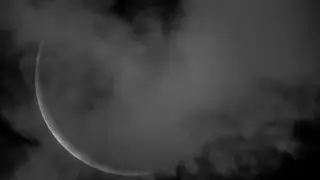
Early October 2026 brings two significant astronomical events for skywatchers in North America. On October 6th, the Moon will occult Jupiter during predawn hours in a rare event not to occur again until 2034, with Jupiter taking a full minute to disappear and reappear behind the Moon's dark limb. Saturn reaches opposition on October 4th, positioned unusually in the constellation Cetus with its rings now 12 degrees wide after being edge-on in 2025.
Early October 2026 presents a remarkable opportunity for North American observers to witness two distinct planetary phenomena. The Moon will pass directly in front of Jupiter on October 6th, an alignment that won't recur for nearly a decade. During this predawn event, Jupiter's disappearance and reappearance will occur gradually over approximately sixty seconds, with the planet emerging from behind the Moon's unlit edge—a configuration that creates particularly striking viewing conditions.
Meanwhile, Saturn reaches its optimal viewing position on October 4th, when the planet aligns opposite the Sun in Earth's sky. The planetary rings have expanded to twelve degrees in width following their near-edge-on orientation in 2025, and will continue widening until reaching maximum tilt in 2031. Observers may notice Saturn appearing noticeably brighter near opposition due to the Seeliger Effect, a phenomenon related to the planet's fully illuminated phase.
These celestial events may engage amateur astronomers and casual skywatchers across North America, potentially driving increased telescope sales and astronomy club participation during early October. Educational institutions could incorporate these events into STEM curricula, providing students with real-time observational learning opportunities. The occultation's visibility under predawn conditions may reach a broader audience through social media documentation and news coverage, though weather conditions could significantly limit actual observation across regions.