Defense Secretary Unveils Autonomous Warfare Command and Pentagon Leadership Restructuring
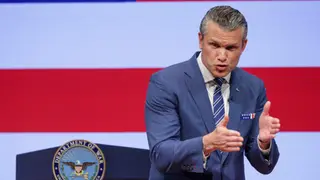
Defense Secretary Pete Hegseth announced the creation of Autonomous Warfare Command (AUTOWARCOM), a new four-star military command dedicated to scaling drone and robotic capabilities across U.S. armed forces. The initiative includes an interim project called Project Agincourt led by Defense Innovation Unit head Owen West, designed to accelerate drone procurement and deployment while establishing closer integration between operators and defense contractors. Hegseth also pledged significant reductions in the number of general officers at the Pentagon as part of broader military modernization efforts.
The Pentagon's restructuring reflects a strategic pivot toward rapid modernization of unmanned systems following lessons drawn from the Ukraine conflict. Rather than committing to a single drone platform, Defense Department leadership aims to create an adaptable ecosystem where military operators, engineers, and private sector innovators collaborate to develop and deploy autonomous systems quickly. The interim Project Agincourt serves as a testing ground for this "warfighting acquisition" model before the permanent command becomes operational in 2027.
Creating AUTOWARCOM as a four-star command represents a significant organizational commitment, placing autonomous systems on par with other major military domains. Congressional authorization will be required for this structural change, similar to precedents set with Special Operations and Cyber commands. The initiative also includes plans to reduce the Pentagon's general officer corps, suggesting broader efforts to streamline military leadership and redirect resources toward technological capability advancement.
The initiative could reshape defense procurement timelines and defense industry relationships by embedding contractors closer to military decision-making processes. Military personnel and technology developers may experience accelerated feedback loops that either enhance operational effectiveness or create new coordination challenges. Broader defense policy could be affected through precedent-setting organizational models. Civilian oversight and Congressional authority over military structure would play critical roles in determining implementation success and long-term strategic implications.