California's billionaire tax ballot measure emerges as major Democratic Party dividing line
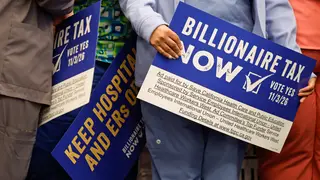
California voters will decide on Proposition 40, a proposed 5% one-time tax on billionaires, in a campaign that has already drawn roughly $100 million in advertising spending. The measure has become a significant fault line among state Democrats, with Governor Gavin Newsom and gubernatorial frontrunner Xavier Becerra opposed, while progressive figures like Tom Steyer and Rep. Ro Khanna support it. The ballot initiative signals broader divisions within the Democratic Party over wealth taxation and economic policy heading into the 2028 presidential primary.
Proposition 40 has become unexpectedly divisive within California's Democratic establishment. Governor Newsom and presumed gubernatorial frontrunner Becerra oppose the measure, while progressive figures including former activist Steyer and U.S. Representative Khanna champion it. Many prominent state Democrats, including Harris and Pelosi, have strategically avoided taking public positions on the proposal, suggesting internal party tensions over wealth taxation approaches.
The campaign reflects genuine uncertainty among voters about the policy's merits. While a strong majority of registered Democrats support the tax, overall support among likely voters reaches only 48%, with opponents arguing that wealthy residents could relocate out of state. Supporters view passage as validating populist economic sentiment, noting that national polling shows raising taxes on billionaires ranks as the most popular attribute for political candidates.
The ballot measure could influence how Democratic presidential candidates approach wealth taxation and economic redistribution in 2028, with a California victory potentially emboldening progressive wings of the party. Conversely, defeat might signal caution about aggressive tax policies in even deep-blue states. The measure's outcome may affect California's competitive positioning on retaining high-net-worth residents and large technology companies, potentially impacting state revenues and business investment patterns across the sector.