Moon-bound data center to demonstrate orbital AI processing capabilities
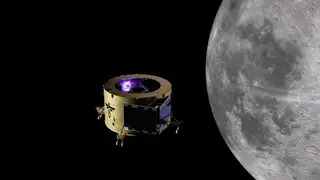
Starcloud has partnered with Firefly Aerospace to send an AI computing payload to lunar orbit aboard the Elytra spacecraft in 2028, building on the company's success training large language models in Earth orbit. The SC-1L payload will process data from the spacecraft's vision system and relay results back to Earth, demonstrating technologies intended for future orbital and lunar data centers. The mission will also support Firefly's Blue Ghost lunar lander, serving as a data relay after the lander reaches the surface.
Starcloud has demonstrated real-world progress in space-based AI infrastructure, having successfully trained a large language model aboard an Earth-orbit satellite equipped with enterprise-grade graphics processing hardware. The company's ambitions extend significantly beyond this initial proof of concept—it has secured substantial funding and filed regulatory applications to deploy tens of thousands of orbital AI processing units globally.
The lunar mission represents a critical testing ground for expanding computational capabilities beyond Earth's immediate vicinity. By processing vision system data in orbit and transmitting results groundside, the SC-1L payload will validate whether advanced AI operations can function reliably in the more demanding environment of lunar space, where existing infrastructure and support systems are minimal.
This development could reshape how data-intensive operations are conducted in space exploration and commercial ventures. The ability to process information closer to its source—rather than transmitting raw data across vast distances—may reduce latency and bandwidth requirements for lunar missions. However, questions remain about power efficiency, radiation resilience, and cost-effectiveness compared to Earth-based processing, factors that will ultimately determine whether orbital AI data centers become economically viable infrastructure for sustained space operations.