Google's AI Hardware Heads to Orbit as SpaceX Tests Space-Based Computing Infrastructure
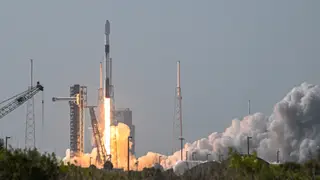
Alphabet is launching its custom-designed tensor processing units into orbit aboard a SpaceX Falcon 9 rocket as part of Project Suncatcher, an initiative to develop solar-powered artificial intelligence infrastructure in low Earth orbit. The test mission, scheduled for Thursday from Vandenberg Air Force Base, will deploy the chips on Planet Labs satellites to evaluate their performance in space conditions where continuous sunlight can generate significantly more power than ground-based facilities. The project aims to eventually link multiple satellite constellations together to handle larger machine learning workloads while operating continuously in space.
Alphabet's initiative represents an ambitious attempt to address terrestrial constraints on artificial intelligence infrastructure by leveraging the orbital environment's unique advantages. The company has identified that satellites in low Earth orbit receive substantially more consistent solar energy than ground-based facilities, potentially enabling continuous operation without the intermittent power generation that limits Earth-based systems. The partnership between Alphabet and SpaceX, despite their competing AI divisions, underscores how significant industry players view space-based computing as a critical frontier worth substantial investment.
This mission follows months of preparation, including preliminary testing of Google's tensor processing units at terrestrial facilities. However, the space environment presents formidable engineering challenges that remain largely untested at scale, including thermal management, radiation shielding, and the accumulated problem of orbital debris that could threaten satellite infrastructure.
If successful, orbital AI infrastructure could reshape how computational resources are allocated globally, potentially reducing energy consumption associated with data centers while enabling new capabilities for machine learning applications. However, experts caution that technical obstacles—including launch capacity limitations, extreme environmental conditions, and debris proliferation—may prove prohibitive. The outcome could affect cloud computing economics, energy grids, and technological access, though widespread adoption remains highly speculative given current feasibility constraints.