Renewable ammonia, wind turbines and battery storage projects advance across India, Australia and Europe
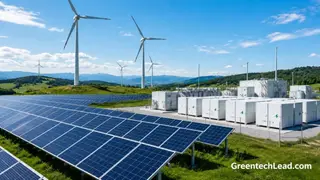
AM Green secured a €585 million 10-year contract to supply renewable ammonia produced in India to Germany, with shipments beginning in 2029. Vestas won orders for 614 MW of wind turbines across two Western Australian projects, including 30-year service agreements expected to generate decades of revenue. FRV Australia commissioned a 100 MW battery storage facility in Victoria using grid-forming technology to provide system-strength services to the grid.
India is positioning itself as a significant supplier of clean hydrogen derivatives to Europe through this partnership. AM Green's facility in Andhra Pradesh represents an important conversion effort, transforming existing ammonia production infrastructure to use renewable electricity instead of fossil fuels. This transition demonstrates how developing economies can leverage existing industrial assets to participate in the global energy transition while creating new export opportunities.
The battery storage project in Victoria represents a technological shift in how grids maintain stability. Grid-forming inverters enable battery systems to provide essential services beyond energy storage, such as voltage support and system strength—functions traditionally supplied by conventional power plants. Combined with Vestas's substantial wind commitments, these projects illustrate how multiple renewable technologies are being deployed simultaneously to support grid reliability in regions transitioning away from fossil fuels.
These developments could accelerate the practical integration of renewable energy across different geographies and sectors. International renewable ammonia trade may help decarbonize industrial processes while creating economic ties between producing and consuming nations. The expansion of storage and wind capacity, alongside grid-stability technologies, may increase renewable energy's viability at larger grid scales, potentially affecting energy prices and industrial competitiveness in participating regions. However, project timelines extending to 2028-2029 suggest considerable infrastructure challenges remain before these technologies achieve widespread impact.