Regional Powers Reshape Trade and Military Presence Across Indo-Pacific
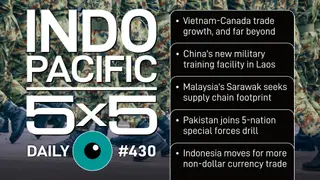
Vietnam and Canada are expanding their strategic partnership with significant trade growth and coordination on regional frameworks, positioning Vietnam as a key player in upcoming APEC and ASEAN leadership roles. China has opened a joint training center with Laos at Ban Keun Airport, marking its third overseas military base and second presence in Southeast Asia. Multiple nations across the region are pursuing non-dollar trade arrangements and military cooperation initiatives as part of broader geopolitical realignment.
Vietnam's elevated regional role reflects its strategic importance as a gateway between major trading powers. The country now serves as Canada's largest merchandise trading partner within ASEAN and third-largest source of imports across the Indo-Pacific, with bilateral trade exceeding $14.5 billion USD in 2025. This partnership extends beyond commerce—Canada and Vietnam are coordinating on major multilateral economic summits, with Vietnam chairing APEC Commission in 2026 and assuming ASEAN leadership in 2030, while Canada will host APEC in 2029.
China's military footprint continues expanding in Southeast Asia through the newly operational Ban Keun training facility in Laos, complementing its existing naval base in Cambodia. The installation features a 2,000-meter runway and supporting infrastructure, positioned approximately 40 kilometers north of Vientiane. This facility represents China's third overseas military installation globally and deepens its defense ties within the region.
These developments signal a shifting Indo-Pacific balance where medium-sized powers seek to strengthen non-traditional partnerships and reduce economic dependence on dominant trade relationships. Vietnam's positioning as a bridge between ASEAN and developed democracies may enhance regional stability through diversified ties, while China's military expansion could heighten tensions among regional actors concerned about security. The parallel pursuit of non-dollar trade arrangements suggests nations may be hedging against currency volatility and geopolitical pressure, potentially reshaping regional economic interdependencies over time.