Zuckerberg Drafted AI Industry Self-Regulation Framework Adopted by Trump Administration
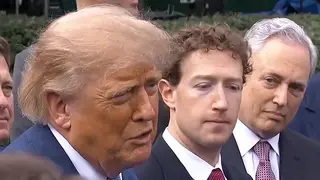
Mark Zuckerberg initiated the concept that became President Trump's "White House Accord on Super Intelligence" during a conversation with House Speaker Mike Johnson at a state dinner, according to reporting by Semafor. The Meta CEO collaborated with Nvidia CEO Jensen Huang to develop principles for AI self-regulation that were circulated before the administration's meeting with major tech executives from companies including OpenAI and Anthropic. Trump subsequently released the accord as an official White House document outlining broad principles for the industry.
Mark Zuckerberg originated the proposal during a dinner conversation with House Speaker Mike Johnson focused on AI regulatory matters. He subsequently partnered with Nvidia's Jensen Huang to formalize a set of guiding principles that could serve as a foundation for industry self-governance. These principles were shared in draft form before a scheduled meeting between the president and technology sector leaders representing companies across the AI development landscape.
The resulting "White House Accord on Super Intelligence" was officially released by the administration following the executive meeting. The document established a framework based on voluntary compliance rather than mandatory regulation, reflecting the collaborative process through which it was developed by industry figures before becoming official policy.
This development could reshape how AI oversight operates in the United States, potentially tilting governance toward industry self-regulation over government mandates. Major technology companies may gain influence over standards affecting their operations, while smaller competitors could face barriers if excluded from the accord's creation. Consumers and policymakers focused on safety safeguards or competition may view self-regulation as insufficient, whereas industry stakeholders could view it as balancing innovation with reasonable oversight. The outcome may significantly influence how other nations approach AI governance.