SpaceX Executes Ambitious Triple-Launch Day Across Two Coasts
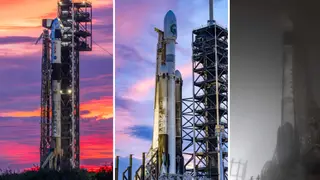
SpaceX is conducting an unusually intense operational day on October 1, 2026, launching three rockets from separate facilities within a 13-hour window. The manifest includes NASA's Crew-13 mission to the International Space Station, the Transporter-18 commercial rideshare mission, and a classified National Reconnaissance Office payload aboard a Falcon Heavy rocket. This marks only the second time SpaceX has successfully executed such a condensed launch schedule across multiple launch sites.
SpaceX's operational tempo on October 1 reflects the company's expanding launch cadence and the growing demand for space access across government and commercial sectors. The three missions serve distinct purposes: ferrying crew to the orbiting laboratory, deploying commercial satellites via a shared launch, and delivering national security payloads. Successfully coordinating launches across Florida and California requires precision in scheduling, resource allocation, and weather monitoring at geographically separated facilities.
The March 2025 precedent demonstrates this capability is repeatable but remains uncommon in the industry. Each launch involves different rocket configurations and payload requirements, with crew missions demanding particularly stringent safety protocols and extended preparation windows. The compressed 13-hour window underscores how streamlined SpaceX's operations have become, though launch schedules remain subject to technical delays and environmental conditions.
This launch intensity may signal broader shifts in space infrastructure utilization. Demonstrated reliability in rapid-succession launches could accelerate timelines for orbital infrastructure deployment, scientific missions, and national security operations. For the commercial space sector, increased launch frequency may lower costs and expand accessibility. However, such operational demands require sustained technical excellence and workforce capacity, factors that could influence competition, pricing, and the pace of space-based services becoming integrated into everyday applications.