Joint European-Chinese Space Observatory Begins Science Operations Studying Earth's Auroras
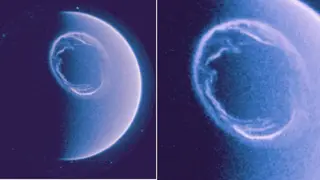
The SMILE spacecraft, developed jointly by the European Space Agency and China, has been cleared to begin its scientific mission following deployment checks in orbit. The observatory is equipped with four instruments designed to investigate how solar wind interacts with Earth's magnetosphere and generates auroral phenomena. In its first observations, SMILE's ultraviolet imaging system captured a complete ring of northern lights—the first such comprehensive view since 2008.
The SMILE observatory represents a significant milestone in international space cooperation, following a three-month commissioning phase that began after its June arrival at its operational orbit. The spacecraft's trajectory is notably ambitious—it swings to altitudes of approximately 121,000 kilometers above the North Pole before descending to 5,000 kilometers over the South Pole, positioning it uniquely to capture comprehensive views of auroral activity across extended observation windows.
The mission's scientific approach depends on coordinated observations from multiple instruments working in tandem. While the ultraviolet camera focuses on auroral phenomena, the soft X-ray imager simultaneously monitors the magnetopause—the boundary where solar wind collides with Earth's magnetic shield. This synchronized data collection strategy enables researchers to establish direct correlations between solar wind behavior and resulting auroral displays.
SMILE's operational capacity may advance understanding of space weather phenomena that affect technological infrastructure and communications systems on Earth. The observatory could provide scientists with unprecedented data about solar-magnetospheric interactions, potentially improving forecasting models for geomagnetic storms. Such enhanced predictive capabilities might benefit power grid operators, satellite operators, and aviation authorities who must prepare for or mitigate effects of severe space weather events. The collaborative framework between European and Chinese institutions may also signal broader patterns in international scientific partnerships during a period of geopolitical complexity.