European Space Agency Launches Design Studies for Post-ISS Orbital Facility
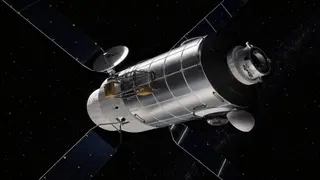
The European Space Agency has commissioned two industrial consortia to evaluate the technical and logistical requirements for constructing an independent orbital station to serve as Europe's successor to the International Space Station following its planned retirement after 2030. The feasibility studies, which began in June 2026 and will conclude within nine months, will assess infrastructure needs, transportation systems, and operational capabilities required to support human spaceflight and research in low Earth orbit. This initiative reflects Europe's intent to maintain independent access to orbital research facilities beyond the ISS era.
The International Space Station, which began operations in 2000 with a planned 15-year mission, has remained in continuous use for over two decades. However, its advancing age has made maintenance increasingly costly and complex, prompting NASA to establish 2030 as the target year for controlled deorbit operations. This timeline creates an urgent window for Europe to develop successor capabilities before losing access to orbital research infrastructure.
Europe brings substantial credentials to this undertaking through decades of ISS collaboration. Beyond the Columbus Laboratory and observation modules, European contributions include critical propulsion and supply systems that have sustained the station. Current development in life-support systems, robotic operations, and orbital servicing technologies provides technical groundwork for independent station design. The nine-month feasibility studies by Airbus and OHB will evaluate how these competencies could translate into a standalone European orbital facility.
A post-ISS European orbital station could reshape global spaceflight by potentially fragmenting what has been unified multinational research infrastructure, though proponents argue it ensures Europe's strategic autonomy in space activities. Access to independent orbital facilities may accelerate European commercial spaceflight development and technology innovation. However, building separate infrastructure could increase costs relative to international cooperation, potentially affecting funding availability for other space science priorities. The initiative's ultimate impact depends on partnership models ESA ultimately pursues.