Dow Lags Behind Tech as AI-Driven Market Bifurcation Widens
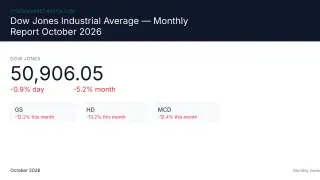
The Dow Jones Industrial Average fell 5.18% in September, closing at 50,906, significantly underperforming the technology-heavy Nasdaq Composite which gained 1.04% over the same period. The divergence reflects a market split between mega-cap technology firms benefiting from massive artificial intelligence infrastructure spending and traditional blue-chip industrials bearing the weight of higher interest rates and a deteriorating consumer environment. The Federal Reserve's hawkish stance under Chair Kevin Warsh is pressuring cyclical stocks and legacy financial companies heading into year-end.
The performance divergence stems from fundamental economic pressures hitting different market segments unevenly. Technology companies, particularly those positioned to benefit from artificial intelligence infrastructure development, have largely insulated themselves from broader economic headwinds. Meanwhile, traditional industrials and consumer-oriented businesses within the Dow face compounding challenges: elevated borrowing costs constraining capital spending, softening consumer demand, and margin pressures from sustained inflation.
The Russell 2000 small-cap index declined 5.77% over the same period, suggesting that economically sensitive companies across market capitalizations are struggling. Treasury yields have risen sharply—the 30-year reached 5.64%—reflecting expectations of prolonged higher interest rates. This environment particularly disadvantages companies reliant on consumer spending and debt financing, explaining why blue-chip stocks like Goldman Sachs, Home Depot, and McDonald's experienced double-digit monthly declines.
This market split could have meaningful consequences for various investor groups. Retail investors holding diversified portfolios weighted toward traditional blue chips may experience portfolio underperformance relative to tech-focused alternatives. Retirees and pension funds dependent on dividend-paying industrials could face pressure on both capital appreciation and yield sustainability. Workers in traditional sectors may indirectly experience effects through corporate investment decisions influenced by stock performance, while concentrated gains in mega-cap tech could amplify wealth inequality if distributions remain skewed toward technology investors.