Machine Learning Reveals Elephants Harmonize Vocalizations in Social Choruses
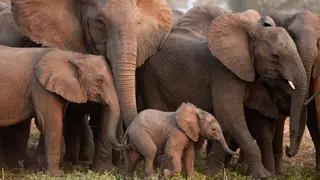
Using machine learning technology, researchers discovered that African savannah elephants converge their deep rumbling calls to sound more similar when vocalizing together as a group. This vocal convergence is particularly pronounced during specific social contexts such as reunions or coordinated group activities, suggesting the rumbles may encode information about what the animals are doing. The findings provide insights into elephant social communication, comparable to how humans unconsciously adopt the speech patterns of those they interact with.
Researchers analyzed nearly 900 recordings of elephant calls collected over 40 years from Kenya's Amboseli National Park, categorizing them across six distinct social scenarios. The study employed machine learning algorithms to isolate individual elephant vocalizations within group choruses—a technical challenge previously difficult for human researchers to solve. The analysis revealed that acoustic similarities between callers increased most noticeably during reunion events, separation maintenance, and coordination activities, suggesting these moments require heightened social alignment.
The discovery builds on earlier findings demonstrating elephants' capacity for vocal imitation. These deep rumbling calls, often inaudible to humans, can travel considerable distances and may communicate both identity and contextual information about group activities. Understanding these communication layers provides scientists with new tools for studying elephant social dynamics and family group cohesion in their natural environments.
These findings may benefit elephant conservation efforts by clarifying how social bonds function within family groups, potentially informing habitat protection and rescue strategies. Wildlife researchers could use this knowledge to better assess population health and stress levels in wild herds. Additionally, the machine learning methods developed here may have broader applications in studying vocalizations across other animal species, advancing non-human communication research generally. Better understanding elephant societies could also enhance welfare practices in captive settings.