Machine Learning Reveals Multiple Meanings Behind Elephant Vocalizations
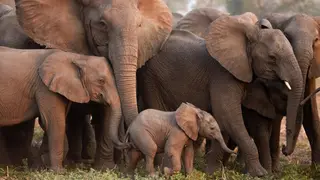
Researchers used artificial intelligence algorithms to analyze hundreds of recordings of African elephant rumbles, identifying at least seven distinct call types including contact calls, greetings, and maternal coos to calves. The deep, low-frequency vocalizations serve different communicative purposes—from coordinating group movements to maintaining contact across distances. While the algorithm could predict elephant behavior from audio recordings better than chance, scientists continue working to fully decode the meaning and function of these complex rumble patterns.
The research team analyzed audio from African elephants in Kenya's Amboseli National Park using machine learning algorithms trained to recognize acoustic patterns in hundreds of rumble recordings. By examining these low-frequency vocalizations in isolation and in overlapping combinations called "choruses," scientists identified at least seven distinct call categories associated with specific behavioral contexts—from maternal communication with newborns to coordinating group movements. The algorithm successfully predicted elephant behavior from sound alone at rates exceeding random chance, indicating that acoustic features reliably correlate with what elephants are doing.
A particularly intriguing finding involved "vocal convergence," where elephant calls became progressively similar during coordination scenarios. This pattern mirrors documented behavior in dolphins, parrots, and humans, suggesting it may serve as a social bonding or agreement mechanism during group decision-making, though researchers acknowledge this interpretation requires further investigation.
Understanding elephant communication systems could advance animal welfare in captive and wild populations by improving human-animal interactions and conservation strategies. The methodology may benefit other species preservation efforts, particularly for endangered or difficult-to-study animals. Broader applications could enhance human comprehension of non-human intelligence and cognition, potentially shifting how societies approach wildlife management and protection policies. Additionally, developing better tools to decode animal communication across species may contribute to fundamental biological knowledge about intelligence evolution.