Pre-Silicon Testing Strategies Strengthen Chip Security Against Real-World Threats
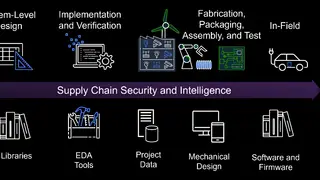
Semiconductor designers must implement security verification processes during the pre-silicon phase to protect against malicious threats comparable in severity to functional safety concerns. The article discusses various threat categories that require mitigation and methodologies for ensuring chip designs remain secure when deployed in real-world systems. Hardware-level security mechanisms are essential alongside software-based protections to safeguard critical infrastructure.
Semiconductor manufacturers now recognize that hardware-level vulnerabilities pose threats comparable to functional safety risks. Attackers can exploit chip design flaws to gain unauthorized system control or extract sensitive information, with the proliferation of connected devices and artificial intelligence expanding potential attack vectors beyond traditional network-based threats requiring physical access.
The article emphasizes that security verification must occur during early design phases rather than after manufacturing. By implementing comprehensive threat assessment and validation processes before silicon production, designers can identify and eliminate vulnerabilities in the architecture itself, reducing the cost and complexity of addressing security gaps post-deployment in critical applications ranging from automotive systems to consumer electronics.
Enhanced pre-silicon security practices could significantly reduce breach risks across industries relying on semiconductor technology, potentially affecting manufacturers, device users, and infrastructure operators. Broader adoption of rigorous security verification might increase design timelines and costs, but could prevent costly recalls, data compromises, and operational disruptions. The shift toward hardware-level security awareness may reshape how companies allocate resources between safety and security during chip development, ultimately influencing product reliability and consumer trust in connected systems.