IONNA Consortium Expands Fast-Growing Network of Upscale EV Charging Destinations
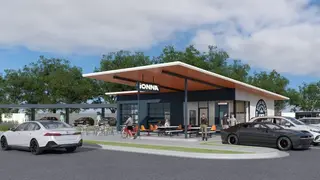
The IONNA automaker consortium has scaled its Rechargery charging network to nearly 1,000 operational bays across more than 100 locations, with over 4,700 additional bays under contract, despite recent federal policy shifts affecting the EV sector. These premium charging locations feature sheltered stations, Wi-Fi, restrooms, and hospitality amenities designed to transform charging from a peripheral errand into a destination-oriented experience. The rapid expansion demonstrates sustained industry confidence in electric vehicle growth and the need for modern charging infrastructure beyond traditional gas station models.
IONNA's Rechargery initiative represents a fundamental shift in how the automotive industry approaches charging infrastructure. Rather than treating chargers as utilitarian add-ons to existing retail spaces, the consortium has created purpose-built environments that combine fast-charging technology with hospitality amenities—Wi-Fi, refreshments, restrooms, and comfortable seating areas. This destination-oriented model emerged from recognition that EV adoption requires removing friction from the refueling experience. The network's performance metrics are striking: nearly 1,000 operational bays across 100+ locations as of March 2026, with an additional 4,700 bays contracted, and expansion plans targeting 30,000 ultra-fast charging points by 2030.
The consortium's recent partnership with Circle K extends this model beyond freestanding Rechargeries into convenience store networks, potentially reaching drivers across 350+ locations nationwide. Market validation arrived through JD Power's 2026 ranking, which identified IONNA as the top-performing DC fast-charging network among newer competitors, citing improved reliability, reduced failed charging attempts, and enhanced user experience compared to earlier infrastructure models.
IONNA's expansion may influence EV adoption rates by reducing practical barriers to long-distance electric vehicle travel, potentially benefiting consumers who face range anxiety or poor charging experiences. The model could shift market expectations, prompting competing charging networks and traditional gas stations to upgrade amenities and reliability. However, the infrastructure's success may depend on sustained EV demand and consumer willingness to pay for premium charging experiences, which could be affected by economic conditions, vehicle affordability, and competing transportation options.