European Health Tech Sector Sees Major Funding Rounds and Strategic Consolidations in Early October
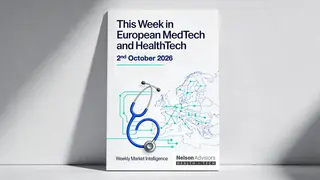
European health technology companies completed several significant financing milestones in early October 2026, including Swedish biotech AnaCardio raising $70.9 million for heart failure treatments and AI platform Biolevate securing €30 million for clinical trial applications. Large pharmaceutical firms made substantial strategic investments, with AstraZeneca taking a $2 billion stake in Summit Therapeutics and Telix finalizing a $2.35 billion acquisition of German radiopharmaceutical manufacturer ITM. Regulatory compliance efforts accelerated across European markets as healthcare providers adapted to new AI governance requirements and consolidated fragmented diagnostic systems into unified platforms.
European healthcare technology companies demonstrated robust investment appetite in early October 2026, with multiple channels of capital deployment. Beyond traditional venture rounds supporting innovation in treatment development and diagnostic platforms, established pharmaceutical corporations pursued larger strategic acquisitions and equity positions to secure emerging therapeutic capabilities and manufacturing assets. This dual-track funding pattern—simultaneous growth-stage venture financing alongside multi-billion-dollar corporate consolidations—reflects confidence in the sector's trajectory while signaling competitive positioning around next-generation oncology treatments and precision medicine infrastructure.
Parallel to commercial activity, regulatory frameworks governing artificial intelligence in clinical settings entered an implementation phase across major European markets. Healthcare institutions responded by integrating fragmented diagnostic tools into unified systems and establishing compliance infrastructure for algorithmic transparency and safety monitoring. This transition from framework development to operational deployment may reshape how hospitals procure and validate AI-assisted technologies.
These developments could influence healthcare delivery efficiency and treatment accessibility across European systems. Successful integration of AI-powered diagnostic consolidation may reduce diagnostic delays and fragmentation, potentially benefiting patients requiring imaging analysis. Conversely, substantial pharmaceutical consolidation and specialized treatment concentration may affect competitive pricing dynamics and smaller-market drug availability. Implementation of regulatory compliance measures, while intended to ensure safety, could create adoption barriers for under-resourced healthcare providers, potentially widening capability gaps between well-funded and under-funded institutions.