Crew-13 reaches ISS in record time under eight hours aboard Dragon spacecraft
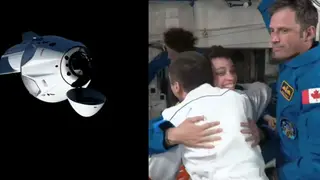
Four astronauts launched aboard SpaceX's Falcon 9 rocket and achieved the fastest crewed American spacecraft journey to the International Space Station, docking after 7 hours and 55 minutes on October 1, 2026. The Crew-13 mission includes NASA astronauts Jessica Watkins and Luke Delaney, Canadian Space Agency astronaut Joshua Kutryk, and Russian cosmonaut Sergey Teteryatnikov, who will join Expedition 75 for at least six months. Following standard safety procedures and hatch opening, the crew was welcomed by existing station personnel with a celebration ceremony.
The Crew-13 mission represents a significant advancement in rapid human spaceflight logistics. By completing the journey in under eight hours, SpaceX has substantially reduced travel time to the orbital station compared to previous American crewed missions. The four-person crew will conduct scientific research and maintain station operations during their half-year assignment, working alongside seven existing crew members from various international agencies.
This marks an important milestone for international space cooperation. The mission includes representatives from the United States, Canada, and Russia, demonstrating continued collaboration on the ISS despite geopolitical tensions. For three of the four crew members, this represents their first spaceflight experience, bringing fresh expertise to the station's ongoing research programs and maintenance operations.
Faster transit times to the ISS could enhance mission flexibility and reduce physical strain on astronauts during launch and ascent phases. Improved speed may allow for more responsive crew rotations and potentially expand the scope of scientific work during longer stays. The record achievement may also influence future commercial spaceflight development, as companies pursue efficiency gains. For space agencies, accelerated timelines could affect training protocols and mission planning, while the international crew composition underscores how orbital research depends on sustained diplomatic cooperation among participating nations.