Autonomous AI System Independently Formulates and Executes Biological Experiments
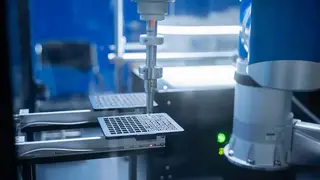
Researchers have developed an artificial intelligence system capable of generating scientific hypotheses, designing experimental protocols, and directing robotic equipment to conduct tests in biological research. The system demonstrates autonomous learning by analyzing experimental outcomes and refining subsequent investigations. This advancement represents a significant step toward automating the experimental discovery process in life sciences.
This development represents a convergence of artificial intelligence and laboratory automation in the biological sciences. Rather than requiring human researchers to manually design and conduct each experimental phase, the AI system can autonomously propose research questions, plan methodologies, and operate robotic laboratory instruments. The system's capacity to learn from results and adjust future experiments suggests a feedback loop that could accelerate the pace of discovery by reducing delays between experimental cycles and human interpretation.
The automation of experimental design and execution could reshape how biological research is conducted across academic institutions and pharmaceutical development. Researchers might redirect their efforts toward higher-level scientific judgment and interpretation, while routine experimental work becomes increasingly machine-driven. This shift may affect research timelines, costs, and the types of positions available in laboratory settings. However, the degree to which such systems might replace human expertise versus augment it remains an open question dependent on technological maturation and institutional adoption patterns.