NASA-Funded Researcher Develops In-Situ Food Production System for Mars Missions
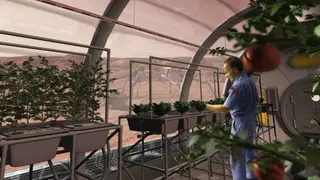
A U.S. innovator won $300,000 from NASA's Mars to Table challenge for designing an integrated food system that would enable astronauts to cultivate meals on Mars rather than transporting prepackaged food from Earth. The challenge, which ran from January 2026, required participants from 33 countries to create sustainable meal plans and growing systems capable of feeding a 15-person crew for over 500 Martian days. This solution addresses critical challenges of long-duration space missions by reducing payload weight and ensuring nutritional variety through locally-grown crops.
NASA's Mars to Table challenge represents a significant shift in how space agencies approach long-duration missions beyond Earth orbit. Unlike the International Space Station, where resupply missions arrive regularly from Earth, distant planetary outposts would face severe logistical constraints. The competition drew international participation, reflecting widespread recognition that sustainable food production is fundamental to establishing human presence on other worlds. Prize money totaling $650,000 across five winning designs demonstrates NASA's commitment to accelerating development of these critical systems.
The winning ANI system stands out for its versatility and efficiency. By integrating multiple food-production methods—cultivation, fermentation, and fungal growth—alongside nutrient recycling, the design addresses several practical concerns simultaneously. Its ability to function with limited water and power resources, while reducing crew workload, tackles real operational challenges that astronauts would face on Mars. Such innovations could fundamentally reshape how space agencies plan for extended missions.
These advances in space food systems could influence how rapidly human Mars exploration progresses, potentially affecting space agency timelines and budgets for the coming decades. Private space companies and international space programs may adopt similar technologies, impacting workforce development in aerospace engineering and astrobiology fields. Broader society could benefit indirectly through spinoff agricultural technologies adapted for Earth-based applications, though such benefits typically emerge years after space program development. The work demonstrates how addressing extreme environments can drive innovation with unforeseen practical applications.