Weekly Space Roundup: Lunar Science Missions, Dark Matter Research, and Starship Progress
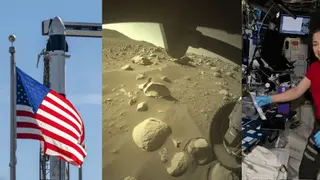
NASA selected three new scientific experiments to conduct on the Moon through its PRISM program, focusing on resource location, hazard monitoring, and finding natural shelter near the lunar south pole. The week also featured developments in Blue Origin's heavy-lift rocket capabilities and Canadian researchers exploring cost-effective methods to study dark matter. SpaceX's Starship Flight 14 dominated headlines while these complementary advances progressed toward establishing humanity's first lunar outpost and eventual Mars exploration.
NASA's PRISM program represents a strategic approach to establishing humanity's permanent presence on the Moon. The three selected experiments address fundamental challenges for a sustainable lunar base: identifying water ice deposits and other resources, assessing environmental hazards that could endanger astronauts, and locating natural geological features that might provide radiation shielding and protection from extreme temperatures. These investigations will inform mission planning for the south polar region, where future outposts are expected to operate.
Supporting this lunar initiative, infrastructure development continues across multiple programs. The Artemis III launch vehicle components are being assembled while crew rotation missions maintain continuous human presence in Earth orbit. This integrated approach—combining scientific preparation, vehicle development, and operational readiness—reflects the coordinated effort required to achieve the Moon Base objective and subsequent Mars missions.
These developments could accelerate timelines for establishing permanent lunar infrastructure, potentially affecting multiple sectors including aerospace manufacturing, technology innovation, and international space partnerships. Success in identifying accessible resources and safe operational sites may influence investment decisions in commercial space ventures. The outcomes could reshape how nations approach deep-space exploration, though substantial technical and budgetary challenges remain before sustained human presence becomes operational.