Pentagon-NIH Agreement Establishes Streamlined Medical Research Framework for Defense Threats
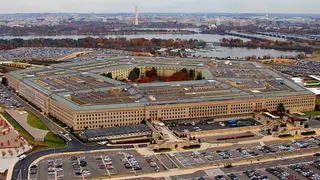
The Defense Department and National Institutes of Health have formalized an interagency agreement to accelerate development of medical countermeasures, diagnostics, and protective equipment against chemical, biological, radiological, and nuclear threats. The arrangement utilizes existing legal authorities including the Economy Act and Project Bioshield Act to give NIH access to the Pentagon's specialized acquisition and procurement infrastructure while maintaining NIH's control over its research funding and mission. The partnership is designed to improve the speed and efficiency of defense-relevant biomedical research development rather than represent a military takeover of civilian research programs.
The agreement leverages two existing congressional authorizations to streamline how civilian and military research institutions collaborate. The Economy Act provides the legal foundation for one federal agency to purchase services from another, while the Project Bioshield Act, enacted nearly two decades ago, specifically empowered the NIH's infectious disease division to use expedited procurement methods for developing medical solutions to chemical, biological, radiological, and nuclear threats. This framework preserves NIH's independent control over research priorities and funding decisions while giving it access to the Pentagon's specialized acquisition tools and contracting expertise.
This partnership could affect the timeline for developing medical countermeasures against emerging threats, potentially improving preparedness for public health emergencies with dual civilian-military applications. Research institutions and biotech contractors may see changes in how defense-related projects are contracted and funded. The arrangement could influence how federal agencies coordinate on biological threats, though outcomes depend on implementation and whether efficiency gains materialize without compromising research independence or civilian-military boundaries.