Wearable Robotic Exoskeletons Transition From Concept to Real-World Applications Across Multiple Industries
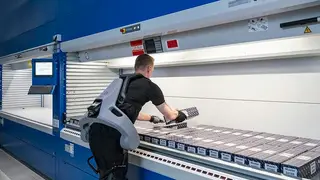
Powered exoskeletons designed to augment human physical strength and endurance are now being deployed across diverse sectors including warehouse operations, emergency rescue, military combat, and medical rehabilitation. Companies such as IKEA, Ford, and Boeing have integrated the technology into their operations to reduce worker fatigue and improve efficiency during demanding tasks. Recent field tests have demonstrated measurable benefits including improved performance and reduced physical strain on users.
Exoskeleton technology has deep historical roots extending back to the late 1800s, though modern implementations differ dramatically from earlier concepts. The field experienced significant acceleration recently as manufacturing costs for essential components like robotic motors, sensors, and electronic control systems declined substantially, making commercial deployment feasible across multiple industries.
Current applications span both industrial and emergency response domains, with organizations ranging from major manufacturers to rescue teams evaluating the devices' practical benefits. Market analysts project considerable growth potential, with sector valuations expected to expand significantly through the 2030s as refinement continues and new use cases emerge.
Widespread adoption of exoskeleton technology could reshape labor dynamics across physically demanding occupations by reducing injury risk and worker fatigue, potentially extending careers in manual work. However, implementation may raise questions about employment displacement, training requirements, and equitable access to equipment across different organizational sizes. Medical and rehabilitation applications could improve recovery outcomes for patients, though long-term health effects of extended device use remain areas requiring further study and monitoring.