Google deploys experimental AI chips to orbit to test performance in space conditions
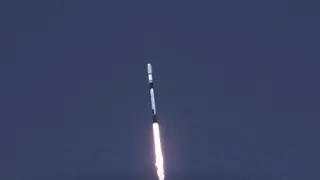
Google's Project Suncatcher satellite launched into low-Earth orbit carrying the company's Tensor Processing Units to evaluate how the chips perform in the harsh space environment during launch and deployment. The experimental chips have already undergone rigorous testing on Earth, including exposure to simulated cosmic radiation and solar radiation at a proton beam facility, and demonstrated remarkable resilience to ionizing radiation expected over five years in space. The satellite also tests a novel cooling system designed to dissipate heat from the AI chips in the absence of air circulation, as part of Google's broader vision for deploying data centers in orbit to leverage solar energy and reduce terrestrial infrastructure demands.
Google's experimental satellite represents an important milestone in validating whether computing hardware can survive the space environment long enough to be operationally useful. The chips have undergone preliminary stress testing through exposure to radiation levels comparable to what five years in orbit would deliver, suggesting they possess adequate durability for this application. The cooling innovation addresses a fundamental engineering challenge: dissipating the substantial thermal output of processors without the benefit of atmospheric convection or traditional air-cooling systems.
Multiple technology companies, including OpenAI and xAI, are pursuing orbital data center concepts as potential solutions to the growing energy and infrastructure demands of AI systems. Google's follow-up missions planned for 2027 will focus on testing inter-satellite laser communication capabilities, which would be essential for any functional orbital data center network.
If successful, orbital data centers could influence where computational infrastructure is located and how energy resources are allocated globally, potentially reducing some terrestrial power demands. However, the transition remains uncertain—experts note significant engineering obstacles and cost-efficiency questions must be resolved first. The astronomical community has raised concerns about orbital infrastructure contributing to light pollution, which may affect scientific observation. The outcome of these experimental launches could shape regulatory and environmental policy discussions around space-based technology deployment.