Wisconsin Designer Transforms Dated 1990s Kitchen Into Vibrant Family Space
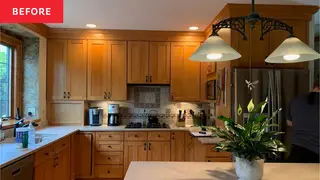
An interior designer tackled a late-1990s kitchen renovation that featured outdated natural maple cabinetry and inefficient layout. The designer discovered a striking Schumacher wallpaper that became the inspiration for mixing warm walnut tones with berry hues, creating a compromise between the husband's preference for wood and the wife's desire for color and personality. Working with an architect, the designer also reconfigured the choppy layout into a more functional and cohesive space.
The kitchen redesign required collaboration between multiple professionals to achieve both aesthetic and functional goals. Designer Emily Winters partnered with architect Meg Baniukiewicz to reconfigure the spatial layout, while a contractor managed the comprehensive renovation that included custom cabinetry, new appliances, updated plumbing and electrical systems, and fresh finishes throughout. The four-month project involved selecting complementary materials, including new countertops, backsplash, and strategic paint choices that unified the space.
The design solution balanced competing preferences within the household by using the wallpaper pattern as a unifying element. Rather than choosing between the husband's preference for wood tones and the wife's desire for vibrant color, the team introduced natural walnut cabinetry alongside deep berry-painted elements. Additional refinements included an appliance garage for storage and the preservation of original architectural details like crown molding in the adjacent bar area.
Kitchen renovations of this scale and cost may influence homeowners' expectations for what modernizing an outdated space requires, potentially affecting decisions about when to undertake major home projects. The design approach—using professional expertise to mediate aesthetic preferences between household members—could resonate with families navigating similar design disagreements. Such high-end renovations may also shape aspirations around kitchen functionality and design, though the $275,000 investment represents significant financial commitment that remains inaccessible to many households.