Two-Tone Cabinetry and Warm Materials Create Sophisticated Kitchen Sanctuary
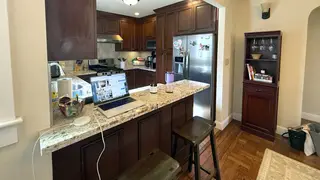
An interior designer created a personalized kitchen for a first-time homeowner that balances professional aesthetics with comfortable, livable design. The space incorporates two-toned cabinetry, layered natural materials, and aged brass details to support cooking, entertaining, remote work, and daily life with a small dog. The cohesive design flows seamlessly into the adjacent dining and living areas while meeting practical requirements for storage and appliance solutions.
The kitchen redesign addressed multiple lifestyle needs within a single cohesive space. The owner required a functional work-from-home environment alongside entertainment capabilities and pet-friendly features—demands that shaped every design decision. The designer achieved this by strategically expanding storage beyond the original kitchen footprint, introducing a dedicated coffee station and bar seating that extended the kitchen's social purpose into the adjacent dining and living areas.
The material palette became central to balancing these practical upgrades with visual warmth. Soft sage cabinetry paired with quartzite countertops created visual interest while maintaining the understated aesthetic the homeowner desired. Aged brass hardware and fixtures threaded throughout provided subtle sophistication without introducing jarring modern elements, allowing the space to feel both professionally designed and personally inhabited.
Kitchen renovations featuring personalized design touches may influence how first-time homeowners approach home customization, potentially shifting expectations toward professionally curated spaces that blend functionality with aesthetic intention. The emphasis on multi-purpose design—work, cooking, entertaining, pet accommodation—could reflect broader lifestyle changes that prioritize flexible home environments. This approach to integrated storage and seamless room flow might encourage broader adoption of cohesive design thinking across residential spaces, though substantial costs likely limit direct applicability for many households.