Egypt's Automotive Sector Surges with 50% Growth Amid Broader Economic Expansion
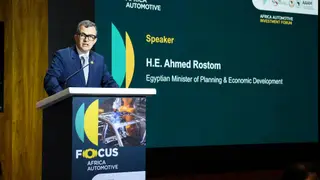
Egypt's planning minister announced that the automotive manufacturing sector experienced exceptional growth of 50% during the first quarter of fiscal year 2025/2026, reflecting broader structural economic reforms. The country's overall GDP growth rate reached 5.1%, up from 4.4% in the previous year, driven primarily by strong performance in productive sectors including industry, telecommunications, and commerce. These developments were highlighted during the African Automotive Investment Forum at the El-Alamein Africa 2026 conference, emphasizing Egypt's positioning as a regional hub for automotive manufacturing and export in Africa.
The automotive sector's exceptional performance occurred within a broader economic recovery across multiple industries. Minister Roustom highlighted that productive sectors including telecommunications and commerce collectively contributed nearly half of Egypt's overall growth gains. This diversification suggests the economic expansion extends beyond a single industry, supported by structural reform initiatives aimed at modernizing regulatory frameworks and attracting foreign direct investment.
The government's integrated approach involves coordination across multiple ministries overseeing investment, trade, industry, and planning. Officials emphasized that reforms targeting competitiveness and private sector expansion specifically focus on high-value manufacturing with export capacity, positioning the automotive industry as a cornerstone of regional trade strategy.
Egypt's automotive growth could strengthen its position as a manufacturing and export hub within African markets, potentially attracting regional investment and creating employment opportunities in related supply chain industries. Neighboring nations may face increased competitive pressure, while African countries seeking automotive production partnerships may redirect attention toward Egyptian manufacturers. The broader economic recovery could influence regional trade dynamics and intra-African commerce patterns, though sustainability depends on maintaining reform momentum and global market conditions.