NASA's Roman Space Telescope achieves stable pointing and captures first cosmic images with coronagraph
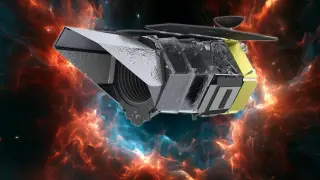
NASA's Nancy Grace Roman Space Telescope successfully completed tests demonstrating exceptional pointing precision comparable to targeting a dime from 150 miles away. The telescope's coronagraph instrument received light from the cosmos for the first time and captured clear images of stars in the Large Magellanic Cloud. These achievements confirm the instrument's readiness to search for and image exoplanets.
NASA's Roman Space Telescope has demonstrated two critical capabilities needed for its exoplanet-hunting mission. The observatory's fine-guidance system can maintain pointing accuracy to better than one-hundred-thousandth of a degree, a precision level that allows it to gather images over extended periods ranging from minutes to hours. This stability is achieved through continuous monitoring of known reference stars and real-time corrections to counteract any spacecraft drift.
The telescope employs an innovative guidance approach by repurposing its spectral measurement capabilities—the detailed wavelength patterns it collects for scientific analysis—to help determine and maintain its precise positioning. This integrated design eliminates the need for a separate guiding instrument, streamlining the observatory's architecture while maximizing its functionality.
Roman's successful pointing demonstrations represent progress toward detecting and imaging exoplanets beyond our solar system, potentially affecting our understanding of planetary diversity and the prevalence of worlds that could harbor life. The mission could enable astronomers to characterize the atmospheres and physical properties of distant planets more directly than current methods allow. These capabilities may influence long-term space exploration priorities and advance scientific knowledge relevant to fundamental questions about our place in the universe.