Cobalt-Based Film Opens Cost-Effective Route to Quantum Material Research
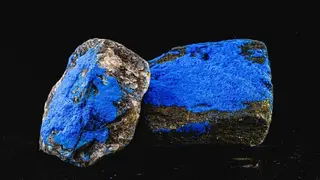
Researchers have successfully created a cobalt-based thin film that displays magnetic properties characteristic of Kitaev quantum materials, offering a significantly more affordable alternative to rare metals like ruthenium and iridium traditionally used in such research. The team incorporated cobalt atoms into sodium antimonate to form honeycomb-patterned structures that naturally generate the desired magnetic interactions without requiring special processing techniques. This advancement could democratize quantum material research by reducing material costs while maintaining the physical properties needed to study exotic quantum states.
Kitaev materials attract scientific attention due to their potential to host quantum spin liquids—exotic magnetic states where atomic spins remain in constant motion rather than freezing into predictable patterns. This unusual behavior makes them valuable for understanding quantum mechanics and potentially developing new technologies. However, previous research has concentrated on compounds incorporating scarce and expensive metals like ruthenium and iridium, which limited accessibility for many research groups.
The sodium antimonate base material already possesses a natural honeycomb crystalline structure at the macroscopic level. When cobalt atoms were introduced at modest concentrations (approximately 4%), they spontaneously organized into smaller honeycomb arrangements within the larger framework, generating the magnetic properties associated with Kitaev systems. The resulting material demonstrated ferromagnetic characteristics at around 88 Kelvin while maintaining antiferromagnetic interactions between layers.
This development could broaden participation in quantum material research by lowering material procurement costs for academic and industrial laboratories. If cobalt-based systems prove viable for studying quantum magnetism, the shift toward abundant metals may accelerate prototype development and theoretical validation in quantum computing fields. However, the material has not yet demonstrated quantum spin liquid behavior, so practical applications remain dependent on further characterization and engineering refinements.