Court Battles Heat Up Over State Laws Mandating Ten Commandments Displays in Schools
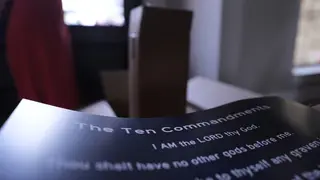
Five states have enacted laws requiring or permitting Ten Commandments displays in public school classrooms, with more than 20 states considering similar legislation while the U.S. Supreme Court may take up the issue this term. Legal challenges turn on whether such posters constitute religious instruction as part of state-mandated curriculum or merely passive displays without active classroom engagement. The states with these laws vary in their requirements, including specifications for poster size, font, and whether contextualizing documents can accompany the religious text.
Five states have now passed legislation governing Ten Commandments displays in public classrooms, with Arkansas, Louisiana, Texas, and Alabama requiring the posters while Tennessee makes them optional. The laws differ significantly in their specifications—some mandate particular dimensions and typefaces, while others permit accompanying historical documents. Notably, Texas prohibits such contextualizing materials. All versions use the King James Protestant formulation rather than Catholic, Lutheran, or Jewish versions of the Ten Commandments.
The central legal dispute hinges on whether these displays function as passive decoration or constitute active religious instruction. Challengers argue the posters represent state-mandated religious teaching that violates constitutional separation of church and state, while state officials maintain they require no teacher engagement or student interaction. The Supreme Court's previous reasoning in a 1980 Kentucky case may no longer apply following a significant 2022 precedent reversal.
The outcome could substantially affect public school policies nationwide, as more than 20 additional states contemplate similar legislation. Students, parents, educators, and school administrators may face different obligations and protections depending on how courts ultimately rule. The decision may also establish precedent regarding what constitutes permissible religious expression in government institutions versus prohibited religious instruction, influencing how schools navigate broader questions about displaying historical or cultural materials with religious significance.