How medieval scholars interpreted ancient bones before the science of paleontology emerged
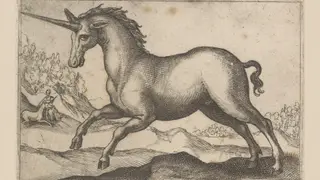
Before vertebrate paleontology developed as a scientific discipline, medieval and ancient peoples interpreted large fossilized bones as evidence of mythical giants and legendary creatures, drawing on cultural mythologies and philosophical speculation. Early scholars including Greek philosophers and Roman historians documented findings of enormous skeletal remains across Europe and the Mediterranean, attributing them to extinct races of giants and cyclops. The concept of extinction itself was once considered heretical, reflecting the challenge of explaining fossils before modern biological understanding.
Ancient civilizations across the Mediterranean and Europe encountered massive skeletal remains that challenged their understanding of the natural world. Greek and Roman scholars documented these discoveries, with some proposing they belonged to vanished races of giants, while others attributed them to mythological creatures like the one-eyed cyclops. The misidentification stemmed partly from incomplete anatomical knowledge—the large nasal cavity in elephant skulls, for instance, resembled a single eye socket.
During the medieval period, religious frameworks dominated interpretations of fossil evidence. Mammoth tusks unearthed in Siberia were reimagined as unicorn horns or dragon remains, and enormous teeth received veneration as holy relics. The seventeenth century brought the first serious scientific challenge to these interpretations when anatomists proposed an alternative explanation, yet widespread acceptance remained elusive for generations.
This historical account may influence how modern audiences understand the evolution of scientific thinking and institutional resistance to new ideas. Understanding how previous generations misinterpreted fossil evidence could foster greater appreciation for evidence-based inquiry and the gradual refinement of knowledge. Additionally, the narrative illustrates how cultural and religious frameworks shape interpretation of physical data, potentially prompting reflection on contemporary assumptions that may similarly limit understanding of natural phenomena.