Two new Australian stick insect species discovered, one with never-before-seen egg structures
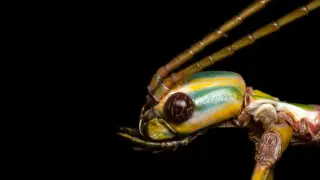
Researchers at the University of Sydney identified two previously unknown species of large Australian stick insects and reclassified a third species that had been misidentified for decades. One of the newly discovered species produces unusual eggs with distinctive lidlike structures never before documented in the genus. The findings demonstrate that significant insect biodiversity remains undocumented despite extensive scientific study and thousands of citizen science observations.
Australian stick insects from the genus Anchiale have proven far more diverse than previously understood. Researchers conducting a comprehensive review discovered that five distinct species exist where scientists had only documented two, fundamentally reshaping how the group is classified. The distribution of these insects spans a considerable geographic range across eastern Australia, from coastal New South Wales through Queensland into the tropical north.
One newly identified species exhibits reproductive biology unlike any documented in its genus, producing eggs with a distinctive lidlike covering. This morphological feature represents a novel adaptation never before recorded among Anchiale stick insects, suggesting the group's evolutionary history contains more variation than earlier studies indicated. The findings underscore how contemporary research tools and revisited collections can overturn longstanding taxonomic assumptions.
This discovery may influence how researchers approach insect biodiversity assessment globally. Museums and herbaria worldwide could contain misidentified specimens awaiting reclassification, potentially affecting ecological surveys and conservation planning. The research suggests that even well-studied species in accessible regions warrant re-examination, which could redirect funding toward taxonomy and specimen review. For public science, the findings demonstrate that citizen observations, while valuable, require expert validation to detect genuinely novel species obscured within morphologically similar populations.