Advanced Computer Simulations Trace Early Universe Transformation by Primordial Stars
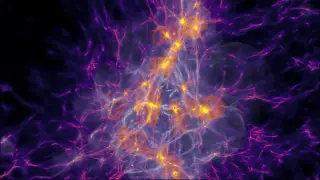
The MEGATRON project uses sophisticated computer simulations to model how the earliest stars illuminated the dark Universe and created the chemical elements—including carbon, oxygen, and iron—necessary for planet and life formation. The research combines detailed models of radiation, chemistry, and galaxy formation to connect observations of young galaxies made by the James Webb Space Telescope with chemical signatures found in ancient Milky Way stars. These simulations represent a major breakthrough in understanding one of the most pivotal periods in cosmic history.
The MEGATRON project combines multiple computational approaches to model the physics of the early cosmos. Researchers track how radiation from newborn stars interacted with surrounding gas clouds and how nuclear fusion within those stars created heavier elements. These simulations operate at unusually high resolution, revealing small-scale structures that coarser models typically overlook. The work integrates findings across three dimensions: observations from modern telescopes studying distant young galaxies, chemical analysis of nearby ancient stars as records of cosmic history, and theoretical predictions about how stellar processes shaped galaxy development.
This research could advance scientific understanding of fundamental cosmic origins, potentially refining predictions for future space telescope observations and deepening knowledge of how chemical elements became distributed throughout the universe. Enhanced simulation accuracy may improve educational frameworks for teaching stellar and galactic evolution. The work demonstrates how international collaboration in computational astrophysics can tackle complex problems, possibly influencing funding priorities for scientific computing infrastructure and international research partnerships.