Battery Storage and Hybrid Renewable Projects Mobilize Over €1 Billion in European Investments
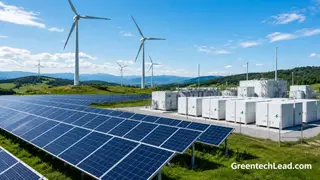
Copenhagen Infrastructure Partners committed €270 million to develop a 350 MW battery storage facility in Scotland, advancing its portfolio of grid-scale storage assets. In Bulgaria, Renalfa and Eurowind brought a 242 MW solar and 773 MWh battery hybrid complex into operation, while Rezolv Energy energized the first 192 MW phase of Romania's largest new wind farm in over a decade. Combined, these projects represent substantial capital deployment toward renewable energy and grid stability infrastructure across Europe.
Europe's renewable infrastructure is being bolstered through major capital commitments across multiple technologies and geographies. In Scotland, a large-scale battery facility aims to enhance grid stability with four hours of storage capacity, while simultaneously securing long-term revenue through commercial agreements. Meanwhile, southeastern Europe is witnessing simultaneous deployment of solar generation paired with battery systems, with developers planning substantial additional wind capacity that would bring total investment in the Bulgarian complex beyond half a billion euros.
The Romanian wind initiative represents a significant addition to the country's renewable capacity, with financing structured across two phases and backed by institutional investors. Corporate power purchase agreements underscore growing demand from commercial buyers for renewable electricity. These projects collectively span energy generation, storage, and supporting infrastructure like EV charging, addressing interconnected aspects of the energy transition.
These investments may strengthen European grid reliability by increasing storage capacity alongside renewable generation, potentially reducing reliance on fossil fuel peaking plants. Developers and financial institutions participating signal confidence in long-term renewable energy economics. The projects could create construction and operational employment across multiple countries while supporting decarbonization targets, though their local environmental impacts—land use, manufacturing supply chains—warrant consideration alongside their climate benefits.