September's Most Bullish Technical Setups Deliver Mixed Results
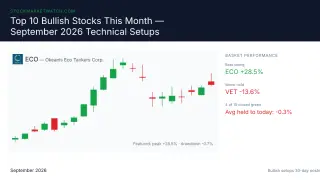
A basket of ten stocks identified as having the strongest bullish technical signals at the start of September ultimately produced a near-breakeven return of -0.3% when held through the end of the month, with only four of the ten names closing in positive territory. The group achieved an average peak gain of 10.7% during the window but experienced an average drawdown of 4.8%, highlighting the challenge of sustaining momentum in technical setups. Energy sector stock ECO posted the strongest performance, reaching +28.5% intramonth and holding gains of 19.0% by month-end.
The analysis evaluated ten equities that met stringent technical criteria on September 1st, including trend alignment across multiple timeframes, momentum indicators in favorable ranges, and relative strength positioning at elevated levels. The subsequent month-long holding period revealed significant divergence in outcomes: while the basket achieved double-digit intramonth peaks averaging 10.7%, most positions surrendered gains as the window progressed, with pullbacks averaging 4.8%. The energy sector dominated both ends of the performance spectrum, with a tanker shipping name generating the strongest sustained return while a midstream peer posted the largest monthly loss.
The mixed results underscore a fundamental challenge in technical analysis: strong setup indicators at a single point in time provide limited predictive power for sustained directional moves. Four of the ten names closed the month profitably, while six experienced net losses despite meeting identical screening criteria. The data suggests that technical signals may identify potential entry points where risk-reward appears favorable, but maintaining positions through unfavorable reversals requires supplementary decision-making frameworks.
Individual investors and traders relying on technical pattern recognition may gain perspective from this performance review on the limitations of single-timeframe screening approaches. Results could inform strategy adjustments regarding position sizing, stop-loss discipline, or the integration of additional confirmation signals before committing capital. Institutional portfolio managers tracking systematic technical strategies may similarly use such outcome analyses to calibrate expectations and refine execution methodologies, potentially affecting capital allocation across equity markets.