Short Squeeze Candidates Disappoint in September; High-Risk Wagers Backfire
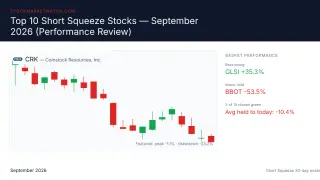
Ten stocks flagged as top short-squeeze candidates at the beginning of September proved to be poor performers when held through the month, with the basket declining 10.4% on average despite intermittent intramonth rallies. Only three of the ten names closed green, while three suffered losses exceeding 20%, underscoring the speculative and volatile nature of short-squeeze setups that often fail to develop as anticipated. The group experienced an average peak gain of 14.3% but gave back those gains amid an average drawdown of 20.2%, with the worst performer losing 53.5%.
Short-squeeze screening strategies rely on identifying stocks with elevated short interest, extended covering timelines, and confirming technical signals—a combination that theoretically suggests vulnerability to rapid price reversals. The September cohort demonstrated how such setups frequently fail to materialize as expected. While individual names like Greenwich LifeSciences and ImmunityBio delivered positive returns, the group's aggregate underperformance reflects a fundamental challenge: squeezes require sustained buying pressure and catalysts that rarely align with a screener's initial thesis. Most candidates peaked within days before surrendering gains through subsequent weakness.
The volatility embedded in these positions—averaging 20-point drawdowns despite initial rallies—underscores why timing execution matters critically for this trading approach. Investors who entered at the screen date faced intramonth swings exceeding 50 percentage points in some cases, exposing the gap between theoretical short-squeeze mechanics and real-world price dynamics.
Retail and institutional traders using squeeze-detection tools may experience significant capital losses when underlying thesis conditions fail to trigger expected rallies. These high-volatility strategies could redirect speculative capital away from fundamental research and toward momentum betting, potentially increasing systemic market noise. Brokerages and fintech platforms offering screener access may face client dissatisfaction when publicized picks underperform, though such outcomes remain inherent to speculative trading frameworks rather than platform failures.