Germany announces major military and energy aid package for Ukraine amid Russian attacks
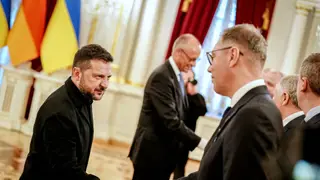
Germany announced a €1.3 billion support package for Ukraine that includes military aid for interceptor drone production and thousands of air defense missiles for IRIS-T systems. The package, announced by Chancellor Friedrich Merz during a visit to Kyiv, also includes €350 million in energy assistance to repair infrastructure damaged by Russian strikes ahead of winter. The total value of agreements between Germany and Ukraine reached over €8.5 billion.
Germany's announcement represents a significant escalation in Western military commitment to Ukraine's defense capabilities. The package targets two critical vulnerabilities: air defense and energy infrastructure. The interceptor drone production initiative is particularly notable, as it establishes domestic manufacturing capacity within Ukraine rather than relying solely on imports, addressing Russia's increasingly sophisticated aerial threats. Simultaneously, the €350 million energy component acknowledges the strategic targeting of Ukraine's power grid by Russian forces and aims to strengthen civilian resilience during winter months.
The broader agreements totaling €8.5 billion involve multiple German and Ukrainian companies establishing joint ventures in defense technology. These partnerships span drone production, artillery systems, and unmanned robotics development, suggesting a long-term commitment to building Ukraine's indigenous defense industrial base rather than temporary relief measures.
The aid package may significantly enhance Ukraine's defensive capabilities against aerial and drone threats while potentially reducing winter humanitarian pressures on civilian populations. For Germany, the announcement signals deepened military engagement in the conflict, carrying domestic political implications and resource commitments. The emphasis on joint production agreements could reshape regional defense manufacturing and technology development. However, the package's ultimate impact depends on implementation timelines, the technological effectiveness of new systems against evolving Russian tactics, and whether energy repairs can withstand continued Russian targeting.