Electoral Court Investigates Presidential Candidate for Bringing Phone Into Voting Booth
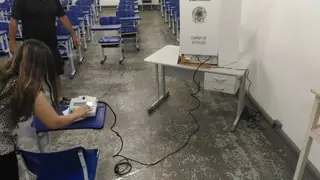
Presidential candidate Romeu Zema brought a cellphone into a voting booth while casting his ballot in Araxá, Minas Gerais on October 4, 2026, prompting the Regional Electoral Court of Minas Gerais to investigate the violation. Brazilian electoral law strictly prohibits mobile phones in voting booths to protect ballot secrecy, with potential penalties up to two years detention for violations. The incident highlights Brazil's enforcement of electoral rules even when involving a major political candidate during the first round of the presidential election.
Brazil enforces strict electoral regulations designed to prevent vote manipulation and coercion. The prohibition on mobile devices in voting booths stems from concerns that voters could photograph ballots to prove their choices, creating opportunities for vote-buying schemes or intimidation. The 1997 Electoral Law explicitly bans phones, cameras, and recording equipment from booths, with serious criminal consequences outlined in the 1965 Electoral Code.
The incident occurred during Brazil's multi-round presidential election process, where a runoff may follow the initial voting if no candidate secures an outright majority. TRE-MG officials noted responsibility extends beyond individual voters to polling station staff, who are tasked with enforcing equipment restrictions at entry points.
The case may influence public perception of electoral fairness and institutional impartiality in Brazil. When enforcement applies to prominent political figures as well as ordinary citizens, it could reinforce confidence in ballot protection mechanisms. Conversely, selective application or lenient treatment of candidates could undermine electoral credibility. The investigation's outcome may signal how consistently Brazil's electoral authorities apply rules regardless of a person's political status or influence.