Asteroid Bennu's Chemical Composition Points to Formation Near Jupiter's Influence
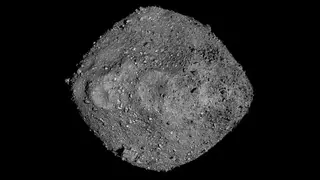
Analysis of samples returned by NASA's OSIRIS-REx probe from asteroid Bennu reveals the space rock likely formed near the solar system's water-ice line rather than in the distant region where comets typically develop. Isotopic measurements of iron, titanium, and chromium show Bennu shares a chemical fingerprint with asteroid Ryugu and CI meteorites, suggesting all three bodies formed from the same reservoir of primordial dust. This discovery provides crucial insights into planetary formation processes occurring 4.5 billion years ago.
The OSIRIS-REx mission successfully retrieved pristine samples from Bennu in 2026, delivering approximately 120 grams of material to Earth for scientific examination. Researchers at ETH Zurich analyzed isotopic ratios of metallic elements within the samples, discovering that Bennu shares a distinctive chemical signature with asteroid Ryugu and a rare class of meteorites called CI carbonaceous chondrites. This similarity strongly indicates all three bodies originated from the same primordial dust cloud.
The findings suggest Bennu formed in a specific region of the early solar system where temperatures allowed water to freeze, rather than in the distant outer regions where comets typically develop. Jupiter's early formation may have fundamentally shaped dust distribution throughout the young solar system's disk, creating conditions where material from different zones could intermingle near the water-ice boundary. This mixing process would have allowed asteroids like Bennu to incorporate chemical signatures from both inner and outer solar system regions.
These discoveries may refine planetary formation models that scientists use to understand how Earth and other planets assembled. Such knowledge could inform future asteroid exploration missions and resource assessment strategies for near-Earth objects. Additionally, improved understanding of primordial solar system chemistry might help researchers identify potentially habitable exoplanetary systems, though direct practical applications remain speculative and dependent on further research validation.