Pro-Moscow Bosnian Serb leader's party wins regional vote amid low turnout
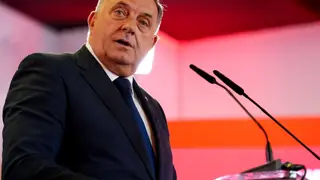
Pro-Russian Serb nationalist Milorad Dodik's Alliance of Independent Social Democrats (SNSD) party secured victory in Bosnia and Herzegovina's October 4 elections, with party member Zeljka Cvijanovic retaining the Serb seat in the country's tripartite presidency. Dodik credited U.S. President Donald Trump and thanked Russian President Vladimir Putin for the party's success, while the vote was marked by relatively low turnout at 42% compared to 52% in 2022. The SNSD is also expected to maintain control of the Republika Srpska local parliament and presidency.
Milorad Dodik, a controversial figure previously serving as president of Republika Srpska until 2025, remains influential in the region despite facing sanctions that prevented his direct candidacy. His party's victory was achieved through Zeljka Cvijanovic, who will occupy the Serb position within Bosnia and Herzegovina's unique three-person executive structure, a governing arrangement designed to balance the country's three major ethnic communities following decades of conflict.
The election results reflect broader geopolitical alignments, with Dodik explicitly crediting both Trump and Putin for his party's success. Meanwhile, Denis Becirovic from the opposing Social Democratic Party secured the Bosniak presidency seat, suggesting continued political competition despite SNSD's regional dominance in Republika Srpska's local institutions.
The declining voter participation, dropping from 52% to 42%, may indicate weakening civic engagement or voter fatigue in the region. SNSD's continued control could reinforce pro-Russian influence in the Balkans at a time of heightened Europe-Russia tensions, potentially affecting Bosnia's relationship with Western institutions. The ethnic power-sharing arrangement means the three presidency seats will likely generate ongoing policy disagreements on regional governance and international positioning.