Oil Industry Divided on When Strategic Petroleum Reserve Will Hit Critical Minimums
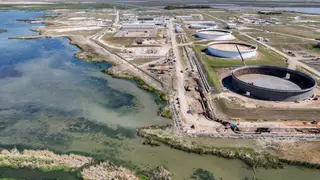
Uncertainty permeates the oil sector regarding the timing of when the U.S. Strategic Petroleum Reserve will reach its effective minimum capacity, with industry executives surveyed by the Dallas Fed offering vastly different estimates ranging from 50 million to 300 million barrels. The SPR has already declined to 284 million barrels, its lowest level since 1982, as global inventories have dropped by more than one billion barrels due to the ongoing Iran conflict and coordinated international releases to stabilize markets. Once reserves hit tank bottom levels where extraction pipes cannot remain submerged in oil, crude prices are expected to increase substantially, making the timing of this critical threshold a pivotal concern for energy markets.
The Strategic Petroleum Reserve operates through underground salt caverns containing both oil and water. As crude is extracted, water rises within these caverns, potentially corroding infrastructure needed for continued pumping. The Energy Department mandates a 70-million-barrel minimum for structural safety, yet experts disagree sharply on practical operational thresholds—ranging from 170 million to 300 million barrels depending on cavern condition and extraction methodology. Current reserve levels of 284 million barrels represent a four-decade low, with additional planned releases expected to reduce supplies further.
The Iran conflict has triggered coordinated global inventory depletion exceeding one billion barrels as nations attempt to prevent supply shocks from destabilizing markets. However, this intervention strategy is finite and unsustainable indefinitely given the ongoing geopolitical tensions and fragile restoration of Persian Gulf exports.
If the SPR approaches critical minimums before market conditions stabilize, crude prices could rise substantially, affecting gasoline costs, transportation expenses, and industrial production across the economy. Consumers may face higher energy bills, while manufacturers dependent on petroleum could see reduced profitability. The divergence in expert estimates creates policy uncertainty, potentially complicating government decision-making about reserve management timing and international coordination on energy market stabilization.