Archaeologists Discover Ancient Roman Temple Complex in German Foothills
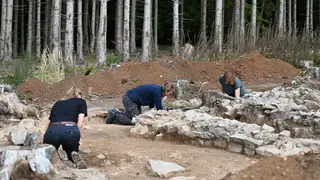
Excavations at the Kapersburg Roman fort in Hesse, Germany have uncovered a third-century temple dedicated to Mars, the Roman god of war, along with fragments of a dedicatory inscription. The site also yielded statue fragments including a representation of Victoria, the Roman goddess of victory, demonstrating the religious practices of Roman military settlements. The temple was part of the fort's adjacent civilian community, known as a vicus, which housed merchants and families supporting the military garrison.
The Kapersburg fort in Hesse represents one of thousands of Roman military installations established across three continents during the empire's expansion. The site functioned as an active garrison for approximately 150 years before being abandoned around the third century. The adjacent civilian settlement, or vicus, provided essential support services and housing for merchants and families connected to the military operation, creating a self-sustaining community beyond the fort's walls.
Recent excavations beginning in 2024 have revealed remarkably well-preserved archaeological layers that had remained largely unexplored since early twentieth-century investigations. The discovery of religious artifacts—particularly the temple, Mars statue fragments, and Victoria statuette—offers new insights into the spiritual beliefs and cultural practices maintained by Roman military communities in frontier regions defending against Germanic tribes.
This discovery may enhance scholarly understanding of Roman provincial life and military-civilian relationships at the empire's borders. The findings could contribute to broader historical knowledge about third-century Roman defensive strategies and religious practices in frontier settlements. For local heritage and tourism sectors, the site may generate increased academic interest and educational opportunities. The preservation of such archaeological layers suggests Germany's Taunus region holds additional undocumented historical resources worthy of further systematic investigation.