October skywatching offers Saturn at opposition, Orionid meteors, and lunar conjunction with the Pleiades
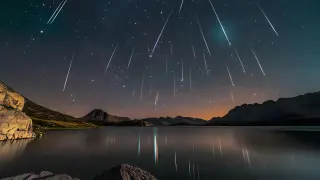
October 2026 presents multiple celestial viewing opportunities including Saturn reaching opposition on October 4th, when the planet will be visible throughout the night as Earth positions itself between it and the Sun. The Orionid meteor shower, composed of debris from Halley's Comet, peaks on October 21-22, with optimal viewing before dawn after moonset. Additionally, the Moon will pass near the Pleiades star cluster on October 27-28, rounding out a month of notable astronomical events.
October 2026 brings a convergence of astronomical events accessible to casual observers. Saturn's opposition positioning—when Earth sits directly between the planet and the Sun—creates ideal nighttime viewing conditions. Simultaneously, the debris trail from Halley's Comet produces the Orionid meteors, though lunar brightness may diminish visibility of fainter streaks. Pre-dawn observation windows offer the clearest displays after moonset.
The month concludes with a lunar conjunction near the Pleiades, a star cluster visible across most inhabited regions without optical aids. The cluster's cultural significance in ancient civilizations reflects its widespread accessibility. Enhanced viewing through binoculars or telescopes can resolve individual stars within the grouping, offering layered observational opportunities for different equipment levels.
Public astronomy events may foster broader interest in space science and celestial mechanics among general audiences. Enhanced engagement with skywatching could increase participation in citizen science initiatives or drive attendance at planetariums and observatories. Educational institutions could leverage these phenomena to illustrate orbital mechanics and comet dynamics. Media coverage may expand public awareness of ongoing astronomical research, such as Saturn's atmospheric features observed by space telescopes, potentially strengthening support for continued space exploration funding and scientific outreach.