Supreme Court takes up question of fossil fuel liability for climate damages
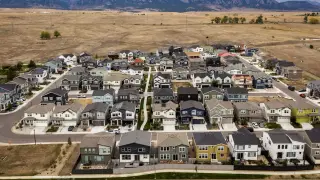
The Supreme Court heard arguments in a case brought by Boulder, Colorado against ExxonMobil and Suncor regarding compensation for climate change costs, with the justices seeking to determine legal responsibility for warming impacts. The oil companies contend the matter belongs with Congress and the federal government rather than state courts, while Boulder argues the case should proceed in Colorado. The court's ruling could determine the outcome of dozens of similar lawsuits filed by local governments against fossil fuel producers across the country.
Boulder's lawsuit represents part of a broader wave of climate litigation in which municipalities are attempting to hold fossil fuel producers financially accountable for warming-related expenses. The case hinges on a fundamental jurisdictional question: whether individual states can pursue such claims through their own legal systems or whether climate-related liability must be addressed exclusively through federal channels. The oil companies argue that allowing state courts to impose damages would effectively grant states the power to regulate greenhouse gas emissions globally, creating conflicting legal frameworks across different jurisdictions.
The justices' questioning revealed their struggle to define the case's boundaries. Some framed it as an emissions reduction effort, while others grappled with whether holding companies liable for climate damages differs meaningfully from direct regulatory authority. The court's eventual decision could either empower municipalities nationwide to seek compensation from energy producers or consolidate climate liability questions within federal jurisdiction, fundamentally altering how climate damages are addressed legally.
The Supreme Court's ruling could reshape climate accountability mechanisms across the country. If Boulder succeeds, hundreds of pending similar lawsuits by cities and counties may proceed, potentially exposing fossil fuel companies to substantial financial liability. Conversely, a decision favoring the oil companies might require climate-affected communities to pursue remedies through federal legislation rather than state courts. The outcome affects not only corporate liability frameworks but also local governments' ability to fund climate adaptation and recovery independently.