Medieval Swedish Migration Reshaped Genetic Ancestry of Finland's Coastal Populations
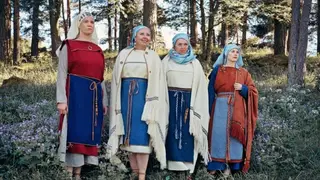
A University of Turku study of 34 ancient genomes from medieval Finland reveals that coastal and inland populations, once genetically similar a thousand years ago, diverged significantly due to Swedish migration during the Middle Ages. While inland Finnish communities maintained genetic continuity with their medieval ancestors, southwestern coastal residents acquired substantially more Scandinavian ancestry over subsequent centuries. The research demonstrates how population movement across the Baltic Sea reshaped the genetic makeup of specific regions rather than occurring uniformly throughout the country.
The research examined genetic material from individuals buried in southwestern Finland between the 11th and 13th centuries, comparing their DNA profiles with both contemporary populations across the Baltic region and modern Finnish residents. By identifying shared inherited DNA sequences, researchers could map historical family connections and trace population movements that occurred over centuries. The study reveals that while people from early medieval Finland maintained genetic relationships with communities in Sweden, Gotland, Latvia, and other Baltic areas, the most substantial genetic shift occurred later, after the period when most of the ancient samples were collected.
This research may influence how historians and geneticists understand medieval European population dynamics and the mechanisms of cultural integration. Understanding how Swedish migration shaped specific coastal regions rather than Finland uniformly could inform demographic studies of other historical migrations. The findings could also enhance genealogical research for individuals with Baltic ancestry, potentially clarifying family origins and migration patterns. Educational institutions studying medieval Scandinavian history or Baltic regional connections may draw upon these genetic insights to complement traditional historical sources.