Government sells off unused immigration detention facilities at significant loss
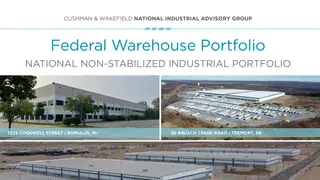
The federal government is divesting seven warehouse properties that Immigration and Customs Enforcement purchased for approximately $700 million as part of a now-scaled-back detention facility expansion initiative. Located across Pennsylvania, Georgia, Texas, Utah, and Michigan, the facilities are being marketed to commercial logistics companies without mention of their original intended use. The divestment suggests internal doubts about the viability of the warehouse-conversion strategy for expanding immigration detention capacity.
The warehouse conversion plan emerged as a rapid-deployment alternative to traditional detention facility construction, with ICE acquiring 11 properties totaling over $1 billion. Internal agency personnel raised concerns from the outset, citing infrastructure inadequacies—notably insufficient water systems and utilities designed for commercial logistics rather than residential detention operations. The accelerated timeline also compromised standard review procedures; environmental assessments were completed within days of property closings, treating industrial buildings as equivalent to existing facilities despite fundamental operational differences.
Legal challenges significantly impeded implementation. Courts in multiple states, including Maryland and Arizona, suspended projects after questioning the sufficiency of environmental reviews and compliance with regulatory requirements. These judicial interventions, combined with staff opposition and practical feasibility questions, ultimately led the administration to reconsider the warehouse strategy and liquidate the portfolio.
The divestment reflects broader questions about detention capacity policy. Taxpayers face substantial financial losses on the transaction. Immigration advocacy organizations may view the reversal as validation of concerns about the initiative's legality and humanitarian implications. Conversely, communities near proposed sites may benefit from avoiding facility construction. The outcome demonstrates how internal dissent, legal oversight, and operational constraints can constrain large-scale federal infrastructure initiatives, potentially affecting future detention policy approaches.