Compressed Gas Technology Offers Long-Duration Energy Storage Solution for Renewable Grids
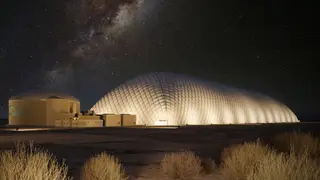
Energy Dome has developed massive battery systems that store energy by compressing carbon dioxide into liquid form, then releasing and heating it to generate electricity through turbines when needed, with storage capacity lasting up to 24 hours. Unlike compressed air storage that requires specific geological formations, the company's approach can be deployed nearly anywhere, making it scalable across global energy grids. The company's first commercial facility in Sardinia demonstrated the viability of this technology for balancing intermittent renewable energy sources.
Energy Dome's technology addresses a critical gap in renewable energy infrastructure by providing storage that lasts significantly longer than existing lithium-ion solutions. The company's carbon dioxide battery system works through a continuous cycle: when power is abundant, compressors liquefy CO2 and capture the resulting heat; when demand spikes, the stored heat warms the gas back into its gaseous state, spinning turbines to generate electricity. This approach eliminates the geological constraints that have limited compressed air storage to specific underground formations.
The economics of long-duration storage favor Energy Dome's model, which reportedly costs 10-15% less than lithium-ion systems for eight-hour applications and offers even greater savings at 24-hour capacities. Because the technology relies on commercially available equipment rather than specialized components, it may be faster and more cost-effective to scale globally compared to battery-dependent alternatives.
If Energy Dome successfully deploys its planned 30 gigawatt-hours of capacity across multiple continents, the technology could meaningfully shift how grids manage renewable energy's intermittency. This may reduce reliance on natural gas peaker plants and lower electricity costs during peak demand periods, benefiting consumers and grid operators. However, the company must overcome significant execution challenges—currently operating just one commercial facility—and contend with slightly lower efficiency than lithium-ion alternatives, which could affect long-term competitiveness and environmental returns.